Featured Papers

Modeling droplet interface bilayers (DIBs) [21]
This paper introduces a new class of ultra-soft, solid-like materials—Jammed Interconnected Bilayer Emulsions (JIBEs)—comprising billions of bilayer-separated aqueous compartments that self-assemble into a robust, solid-like network. We model these materials as a network of springs, where each spring represents the droplet stiffness and governs water transport across the bilayers, capturing the unique coupled mechanics of the system.
JIBEs Droplet networks
Material point method for soft materials [19]
This paper proposes a new stabilization method within a mixed Material Point Method (MPM) framework that achieves linear-linear as well as higher-order B-spline mixed interpolations. MPM is a hybrid Eulerian-Lagrangian particle-based approach. Our work advances MPM development for multiphysics simulations of soft polymeric materials.
Material point mesher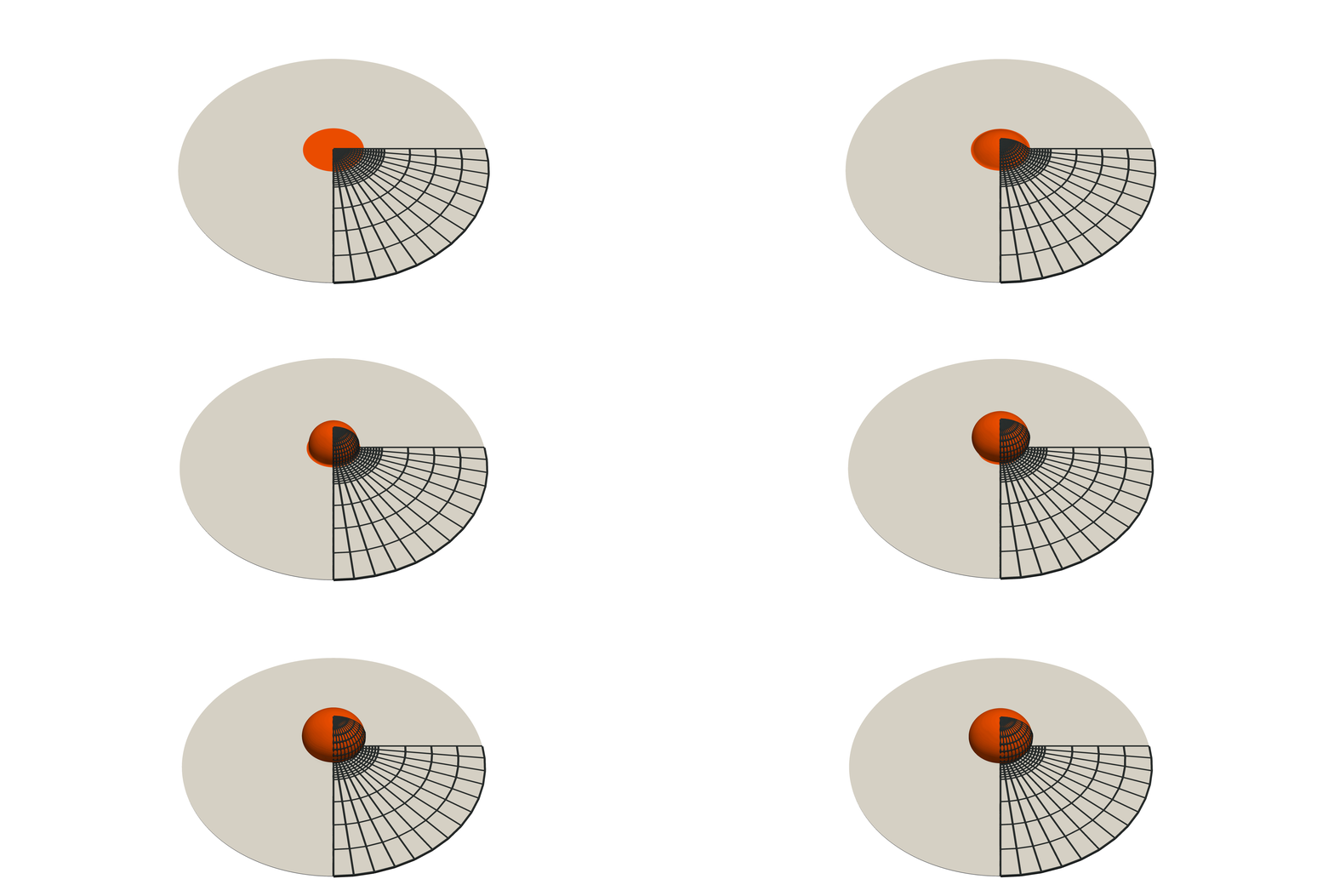
Curvature-resisting material surfaces using IGA [12]
This paper develops a 3D computational model for curvature-resisting material surfaces using surface-enriched isogeometric analysis. By introducing an elastobending length scale, the method captures surface bending effects that stiffen overall material response and enables accurate modeling of complex deformations in soft solids and biological membranes.
Publications
22. (2025). How to Measure Fracture Toughness of Soft Materials: A Comparison of Six Different Approaches Using Blood Clot as a Model Material. International Journal of Fracture. DOI: 10.1007/s10704-024-00820-4
Soft materials are an important class of materials. They play critical roles both in nature, in the form of soft tissues, and in industrial applications. Quantifying their mechanical properties is an important part of understanding and predicting their behavior, and thus optimizing their use. However, there are often no agreed upon standards for how to do so. This also holds true for quantifying their fracture toughness; that is, their resistance to crack propagation. The goal of our work is to fill this knowledge gap using blood clot as a model material. In total, we compared three general approaches, some with multiple different implementations. The first approach is based on Griffith’s definition of the critical energy release rate. The second approach makes use of the J-Integral. The last approach uses cohesive zones. We applied these approaches to 12 pure shear experiments with notched samples (some approaches were supplemented with unnotched samples). Finally, we compared these approaches by their intra- and inter-approach variability, the complexity of their implementation, and their computational cost. Overall, we found that the simplest method was also the most consistent and the least costly one: the Griffith-based approach, as proposed by Rivlin and Thomas in 1953.
21. (2025). {{3D-printable}} Bilayer-Stabilized Jammed Emulsions as Scalable Biological Tissue Mimics. . DOI: 10.26434/chemrxiv-2025-xccxm
We present Jammed Interconnected Bilayer Emulsions (JIBEs) as a class of tissue-like materials with macroscopic scalability and rapid fabrication, comprising millions to billions of bilayer-separated aqueous compartments. These materials closely mimic the organizational structure and properties of biological tissues. Our rapid self-assembly method for producing JIBEs generates milliliter- to deciliter-scale volumes within minutes representing over 10,000-fold improvement in the fabrication speed of droplet-based artificial tissues compared to existing droplet-based methods, enabling the creation of a truly macroscopic material. The method is highly adaptable to a wide range of amphiphiles, including lipids and block-copolymers, providing flexibility in tailoring JIBEs for diverse applications. The jammed architecture of JIBEs imparts unique properties, such as direct 3D-printabilty into aqueous solutions or onto air-exposed surfaces. Their membrane-bound structure also allows functionalization with biological and artificial nanochannels, enabling the material to exhibit the specific properties of the incorporated channels. In this work, we demonstrate three key features of JIBEs using distinct ion channels: tunable conductance, selective transport, and memristance. Incorporating an E. coli outer membrane protein increased ionic conductance by approximately 4,400-fold compared to non-functionalized tissues. Introducing a peptide-based transporter produced ion-selective membranes capable of discriminating ammonium over sodium at a ratio greater than 15:1. Finally, incorporating a model voltage-gated pore enabled the construction of a massively networked memristive device. We propose that functionalizing JIBEs with additional membrane proteins or synthetic ion channels could unlock a broad range of applications, including separations, energy generation and storage, neuromorphic computing, tissue engineering, drug delivery, and soft robotics.
20. (2024). Coupled Field Modeling of Thermoresponsive Hydrogels with Upper/Lower Critical Solution Temperature. Extreme Mechanics Letters. DOI: 10.1016/j.eml.2024.102222
An inf–sup stable FE formulation for the thermo-chemo-mechanical simulation of thermoresponsive hydrogels is herein proposed by approximating the displacement field via quadratic shape functions and both the chemical potential (fluid pressure) and the temperature fields by linear functions. The formulation is implemented into a stable thermo-chemo-mechanical user-element subroutine (UEL) in Abaqus, denoted as Q2Q1Q1. The proposed formulation has been validated in relation to thermoresponsive hydrogels to interpret several examples of transient diffusion-driven swelling deformations. First, the upper/lower critical solution temperature behaviors of thermoresponsive hydrogels has been captured, studying several peculiarities comprising the diffusion length influence at the instantaneous loading state and the overlooked influence of the mass flux and the hyperelastic stretching on the temperature field. Subsequently, numerical analysis have been conducted in order to investigate the impact of temperature-dependent swelling ratio on the mechanical behavior of spheres undergoing compression. The accuracy of the proposed formulation has been assessed by numerically replicating the seminal experiments that explore the influence of crosslinking density on the thermally driven swelling of PNIPAAm hydrogels.
19. (2024). A Subdivision-Stabilized {{B-spline}} Mixed Material Point Method. Computer Methods in Applied Mechanics and Engineering. DOI: 10.1016/j.cma.2023.116567
Subjected to external loadings, polymeric materials, e.g., biological tissues, hydrogels, and elastomers, may undergo extreme, nearly incompressible, (self-)contact deformations. For numerical modeling employing mesh-based techniques such as the finite element method (FEM), these deformations pose significant challenges due to large distortions in the deformed geometry, accuracy issues stemming from volumetric locking effects, and increased computational cost from complex contact searches. As an alternative to mesh-based methods, the material point method (MPM), a continuum-based particle technique, is gaining attention for its ability to handle extreme distortions and capture no-slip contact without added cost. For nearly incompressible material behaviors, while mixed formulations can address locking effects by treating displacements and pressure as independent fields, they can suffer from numerical instabilities close to the incompressibility limit due to the violation of the inf-sup condition, leading to inaccurate nodal pressure solutions. Here we propose an efficient and stable mixed B-spline material point method with highest achievable regularity for quasi-compressible polymeric materials. Using the two-scale relation of B-splines, we introduce a subdivision-stabilization for the two-field mixed MPM and obtain numerically stable, oscillation-free nodal solutions with equal-order interpolations with optimal regularity. Building on the Eulerian-Lagrangian nature of MPM, a previously-converged solution framework is adopted to mitigate issues related to cell-crossing and numerical fracture artifact present in standard MPM. We assess the stability and accuracy of the developed mixed MPM at large deformations for soft materials through the benchmark Cook’s membrane problem. Additionally, we test the robustness of the proposed MPM by modeling several examples, including the compression and indentation of a circular block into a quasi-compressible substrate and the twisting deformation of a rectangular block. The findings demonstrate the MPM’s capabilities for modeling practical soft material applications.
18. (2023). The Accumulation and Growth of {{Pseudomonas}} Aeruginosa on Surfaces Is Modulated by Surface Mechanics via Cyclic-Di-{{GMP}} Signaling. npj Biofilms and Microbiomes. DOI: 10.1038/s41522-023-00436-x
Attachment of bacteria onto a surface, consequent signaling, and accumulation and growth of the surface-bound bacterial population are key initial steps in the formation of pathogenic biofilms. While recent reports have hinted that surface mechanics may affect the accumulation of bacteria on that surface, the processes that underlie bacterial perception of surface mechanics and modulation of accumulation in response to surface mechanics remain largely unknown. We use thin and thick hydrogels coated on glass to create composite materials with different mechanics (higher elasticity for thin composites; lower elasticity for thick composites) but with the same surface adhesivity and chemistry. The mechanical cue stemming from surface mechanics is elucidated using experiments with the opportunistic human pathogen Pseudomonas aeruginosa combined with finite-element modeling. Adhesion to thin composites results in greater changes in mechanical stress and strain in the bacterial envelope than does adhesion to thick composites with identical surface chemistry. Using quantitative microscopy, we find that adhesion to thin composites also results in higher cyclic-di-GMP levels, which in turn result in lower motility and less detachment, and thus greater accumulation of bacteria on the surface than does adhesion to thick composites. Mechanics-dependent c-di-GMP production is mediated by the cell-surface-exposed protein PilY1. The biofilm lag phase, which is longer for bacterial populations on thin composites than on thick composites, is also mediated by PilY1. This study shows clear evidence that bacteria actively regulate differential accumulation on surfaces of different stiffnesses via perceiving varied mechanical stress and strain upon surface engagement.
17. (2023). Locking Treatment of Penalty-Based Gradient-Enhanced Damage Formulation for Failure of Compressible and Nearly Incompressible Hyperelastic Materials. Computational Mechanics. DOI: 10.1007/s00466-023-02314-x
Soft materials are of major interest for biomechanics applications due to their high deformability and susceptibility to experience damage events under different loading scenarios. The present study is concerned with modelling damage evolution processes in these nonlinear materials whose structural responses are prone to locking when low-order kinematic interpolation is employed in the context of nonlinear Finite Element schemes. For this reason, a pair of gradient-enhanced continuum damage schemes are proposed with the aim of tackling mechanical failure problems in applications that exhibit shear and volumetric locking. In particular, we present the consistent formulation and the assessment of the corresponding performance of (i) a mixed displacement-enhanced assumed strain Q1Q1E24 employing a total Lagrangian formulation, and (ii) a three-field mixed displacement-pressure-Jacobian Q1Q1P0 formulation. The novel Q1Q1E24 and Q1Q1P0 formulations are consistently derived and numerically implemented, providing a satisfactory agreement with respect to ABAQUS built-in elements handling the treatment of shear and volumetric locking, respectively, in conjunction to the modelling damage phenomena via the use of a penalty-based gradient-enhanced formulation. This performance is examined via several numerical applications. Furthermore, the final example justifies the need for a formulation combining both mixed FE approaches to simulate problems encompassing both locking issues (shear and volumetric locking), which can be performed using a combination of the Q1Q1E24 and Q1Q1P0 herein proposed.
16. (2023). A Novel Constitutive Model for Surface Elasticity at Finite Strains Suitable across Compressibility Spectrum. European Journal of Mechanics - A/Solids. DOI: 10.1016/j.euromechsol.2023.104981
The surface elasticity theory of Gurtin–Murdoch has proven to be remarkably successful in predicting the behavior of materials at the nano scale, which can be attributed to the fact that the surface-to-volume ratio increases as the problem dimension decreases. On the other hand, surface tension can deform soft elastic solids even at the macro scale resulting e.g. in elastocapillary instabilities in soft filaments reminiscent of Plateau–Rayleigh instabilities in fluids. Due to the increasing number of applications involving nanoscale structures and soft solids such as gels, the surface elasticity theory has experienced a prolific growth in the past two decades. Despite the large body of literature on the subject, the constitutive models of surface elasticity theory at large deformations are not suitable to capture the surface behavior from fully compressible to nearly incompressible elasticity, especially from a computational perspective. A physically meaningful and proper decomposition of the surface free energy density in terms of area-preserving and area-varying contributions remains yet to be established. We show that an immediate and intuitive generalization of the small-deformation surface constitutive models does not pass the simple extension test at large deformations and results in unphysical behavior at lower Poisson’s ratios. Thus, the first contribution of the manuscript is to introduce a novel decomposed surface free energy density that recovers surface elasticity across the compressibility spectrum. The second objective of this paper is to formulate an axisymmetric counterpart of the elastocapillary theory methodically derived from its three-dimensional format based on meaningful measures relevant to the proposed surface elasticity model. Various aspects of the problem are elucidated and discussed through numerical examples using the finite element method enhanced with surface elasticity.
15. (2023). {{AI-dente}}: An Open Machine Learning Based Tool to Interpret Nano-Indentation Data of Soft Tissues and Materials. Soft Matter. DOI: 10.1039/D3SM00402C
14. (2023). A Multiphysics Model to Predict Periventricular White Matter Hyperintensity Growth during Healthy Brain Aging. Brain Multiphysics. DOI: 10.1016/j.brain.2023.100072
Periventricular white matter hyperintensities (WMH) are a common finding in medical images of the aging brain and are associated with white matter damage resulting from cerebral small vessel disease, white matter inflammation, and a degeneration of the lateral ventricular wall. Despite extensive work, the etiology of periventricular WMHs remains unclear. We pose that there is a strong coupling between age-related ventricular expansion and the degeneration of the ventricular wall which leads to a dysregulated fluid exchange across this brain–fluid barrier. Here, we present a multiphysics model that couples cerebral atrophy-driven ventricular wall loading with periventricular WMH formation and progression. We use patient data to create eight 2D finite element models and demonstrate the predictive capabilities of our damage model. Our simulations show that we accurately capture the spatiotemporal features of periventricular WMH growth. For one, we observe that damage appears first in both the anterior and posterior horns and then spreads into deeper white matter tissue. For the other, we note that it takes up to 12 years before periventricular WMHs first appear and derive an average annualized periventricular WMH damage growth rate of 15.2 ± 12.7mm2/year across our models. A sensitivity analysis demonstrated that our model parameters provide sufficient sensitivity to rationalize subject-specific differences with respect to onset time and damage growth. Moreover, we show that the septum pellucidum, a membrane that separates the left and right lateral ventricles, delays the onset of periventricular WMHs at first, but leads to a higher WMH load in the long-term. Statement of Significance: Brain aging is accompanied by many structural and functional changes. In nearly all aged brains, white matter lesions appear in periventricular and diffuse subcortical regions which are associated with progressive functional decline. In our work, we present a multiphysics model that not only predicts the onset location of periventricular white matter lesions but also their subsequent growth as a result of age-related cerebral atrophy and ventricular enlargement. Our model provides a mechanics-based rationale for their characteristic spatiotemporal progression patterns and will allow to identify at-risk subjects for early lesion formation.
13. (2023). Surface Elasticity and Area Incompressibility Regulate Fiber Beading Instability. Journal of the Mechanics and Physics of Solids. DOI: 10.1016/j.jmps.2023.105298
A continuum body endowed with an energetic surface can exhibit different mechanical behavior than its bulk counterpart. Soft polymeric cylinders under surface effects become unstable and form surface undulations referred to as the elastic Plateau–Rayleigh (PR) instability, exclusively driven by competing surface and bulk properties. However, the impact of surface elasticity and area compressibility, along with bulk compressibility, on the PR instability of soft solids remains unexplored. Here we develop a theoretical, finite deformations framework to capture the onset of the PR instability in highly deformable solids with surface tension, surface elasticity, and surface compressibility, while retaining the compressibility of the bulk as a material parameter. In addition to the well-known elastocapillary number, surface compressibility and a dimensionless parameter related to the surface modulus are found to govern the instability behavior. The results of the theoretical framework are analyzed for an exhaustive list of bulk and surface parameters and loading scenarios, and it is found that increasing surface elasticity and surface incompressibility preclude PR instability. Theoretical results are compared with high-fidelity numerical simulation results from surface-enhanced isogeometric finite element analysis and an excellent agreement is observed across a broad range of material parameters and large deformation levels. Our results demonstrate how surface effects can be used to (i) render stable soft structures and prevent PR instability when it occurs as an unwanted by-product of manufacturing techniques or (ii) tune the instability behavior for possible applications involving polymer fibers.
12. (2022). Modeling Curvature-Resisting Material Surfaces with Isogeometric Analysis. Computer Methods in Applied Mechanics and Engineering. DOI: 10.1016/j.cma.2022.115649
Improved understanding of solid surface energy and its role in the overall mechanical properties is of great interest due to the emerging manufacturing techniques of nanostructures, coatings, and synthetic/biological bilayer–polymer hybrids. Continuum numerical modeling of surface stresses efficiently incorporates a zero-thickness membrane bonded to a bulk, intrinsically accounting for surface tension and surface elasticity. Compressive surface stresses are not possible in a purely membrane formulation, ignoring the surface flexural resistance. The extension of material surfaces to account for flexural resistance, i.e., the Steigmann–Ogden model, requires spatial derivatives of second order, posing significant challenges to standard discretization techniques. Hence, the effect of surface curvature resistance on the overall mechanical behavior of complex geometries remains elusive. Here, we develop a three-dimensional computational formulation of curvature-dependent surface energetics at finite strains using surface-enriched isogeometric analysis. Coupled with a hyperelastic bulk, bending-resistance of material surfaces furnishes a new physical length scale, i.e., the elastobending length. We quantify the effect of elastobending deformations for several numerical examples involving soft materials with thin coatings and liquid-shell surfaces, capturing budding-like behavior observed at cell membranes. Our results demonstrate a stiffer overall mechanical behavior when material surfaces resist bending deformations and illustrate how curvature effects lead to complex budding deformations at non-zero initial curvature states. The proposed methodology provides a robust computational foundation to help improve our understanding and mechanical characterization of soft solids, nanostructures, and biological membranes at small scales.
11. (2022). Plateau {{Rayleigh}} Instability of Soft Elastic Solids. {{Effect}} of Compressibility on Pre and Post Bifurcation Behavior. Extreme Mechanics Letters. DOI: 10.1016/j.eml.2022.101797
Solid surface tension can deform soft elastic materials at macroscopic length scales. At a critical surface tension, elastocapillary instabilities in soft filaments emerge that resemble the Plateau–Rayleigh (P–R) instabilities in liquids. The experimentally observed P–R instability of soft elastic filaments has been recently investigated via numerical and theoretical approaches. However, these contributions focus on the incompressible limit and preclude the nonlinear Poisson’s ratio effects in materials, for example, compressible hydrogels with Poisson’s ratios that can go as low as 0.1. Moreover, most of the research on the solid P–R instability elaborate on the onset, ignoring the post-bifurcation regime. Here we show that compressibility matters and the form of the assumed compressible strain energy density has a significant effect on the onset and the post-bifurcation behavior of elastic P–R instability. For example, the P–R instability can be entirely suppressed depending on the form of the free energy density and Poisson’s ratio. To this end, we employ a robust and variational elastocapillary formulation and its computer implementation using surface-enriched isogeometric finite elements at finite strains. We use an arclength solver to illustrate both stable-unstable amplitude growth and bifurcation points in the entire equilibrium path. Stability maps are drawn with distinct stable-unstable regions over various shear moduli, surface tensions, fiber radii, and applied stretches for cases ranging from quasi-compressible to fully compressible. The presented elastocapillary model proves to be useful in quantifying the surface and bulk energies in competition at finite strains and expected to help improve mechanical characterization of soft materials with at least one dimension that is on the orders of the elastocapillary lengthscale lsolid∼O(nm – mm).
10. (2021). Synthetic Hydrogels as Blood Clot Mimicking Wound Healing Materials. Progress in Biomedical Engineering. DOI: 10.1088/2516-1091/ac23a4
Excessive bleeding—or hemorrhage—causes millions of civilian and non-civilian casualties every year. Additionally, wound sequelae, such as infections, are a significant source of chronic morbidity, even if the initial bleeding is successfully stopped. To treat acute and chronic wounds, numerous wound healing materials have been identified, tested, and adopted. Among them are topical dressings, such as gauzes, as well as natural and biomimetic materials. However, none of these materials successfully mimic the complex and dynamic properties of the body’s own wound healing material: the blood clot. Specifically, blood clots exhibit complex mechanical and biochemical properties that vary across spatial and temporal scales to guide the wound healing response, which make them the ideal wound healing material. In this manuscript, we review blood clots’ complex mechanical and biochemical properties, review current wound healing materials, and identify opportunities where new materials can provide additional functionality, with a specific focus on hydrogels. We highlight recent developments in synthetic hydrogels that make them capable of mimicking a larger subset of blood clot features: as plugs and as stimuli for tissue repair. We conclude that future hydrogel materials designed to mimic blood clot biochemistry, mechanics, and architecture can be combined with exciting platelet-like particles to serve as hemostats that also promote the biological wound healing response. Thus, we believe synthetic hydrogels are ideal candidates to address the clear need for better wound healing materials.
9. (2021). Hyper-Viscoelastic Damage Modeling of Whole Blood Clot under Large Deformation. Biomechanics and Modeling in Mechanobiology. DOI: 10.1007/s10237-021-01467-z
Blood clots play a diametric role in our bodies as they are both vital as a wound sealant, as well as the source for many devastating diseases. In blood clots’ physiological and pathological roles, their mechanics play a critical part. These mechanics are non-trivial owing to blood clots’ complex nonlinear, viscoelastic behavior. Casting this behavior into mathematical form is a fundamental step toward a better basic scientific understanding of blood clots, as well as toward diagnostic and prognostic computational models. Here, we identify a hyper-viscoelastic damage model that we fit to original data on the nonlinear, viscoelastic behavior of blood clots. Our model combines the classic Ogden hyperelastic constitutive law, a finite viscoelastic model for large deformations, and a non-local, gradient-enhanced damage formulation. By fitting our model to cyclic tensile test data and extension-to-failure data, we inform the model’s nine unknown material parameters. We demonstrate the predictability of our model by validating it against unseen cyclic tensile test and stress-relaxation data. Our original data, model formulation, and the identified constitutive parameters of this model are openly available for others to use, which will aid in developing accurate, quantitative simulations of blood clot mechanics.
8. (2021). Swelling-{{Induced Interface Crease Instabilities}} at {{Hydrogel Bilayers}}. Journal of Elasticity. DOI: 10.1007/s10659-020-09810-8
Two dissimilar hydrogel layers bonded together become unstable when the compressive stresses due to diffusion-driven swelling of the layers reach a critical point and creases form at the interface. Although creasing instabilities observed on surfaces of soft solids subjected to large compressions are well studied, the transient nature and critical conditions for the emergence of interface creases as a result of swelling behavior of hydrogels remain elusive. Here, we investigate the formation and transient growth of interface creases in bilayer hydrogels through experimental and computational approaches. Equipped with a mixed isogeometric analysis that accounts for large swelling deformations along with dissipative fluid transport phenomena, we show that both the equilibrium and the transient characteristics of interface creases can be tuned by controlling the material properties, in contrast to the reported material-independent behavior of creases in elastomers. The effects of material parameters on the onset and growth of interface creases are quantified in terms of the critical swelling ratio and critical chemical potential, and these values are compared to the critical conditions for the emergence of wrinkling instabilities. In agreement with our experimental observations of swelling bilayer hydrogels, our computational results demonstrate that the formation of creases is energetically more favorable than wrinkle formation at the interface.
7. (2021). Boundary Viscoelasticity Theory at Finite Deformations and Computational Implementation Using Isogeometric Analysis. Computer Methods in Applied Mechanics and Engineering. DOI: 10.1016/j.cma.2020.113579
Use of surface elasticity theory has experienced a prolific growth recently due to its utility in understanding the mechanics of nanomaterials and soft solids at small scales. Various extensions of surface elasticity theory have been proposed. The main objective of this contribution is to formulate a finite deformation theory for boundary viscoelasticity in principal stretches by accounting for strain-dependent boundary stresses. We present a model that utilizes a nonlinear evolution law and thus is not restricted to the states that are close to the thermodynamic equilibrium. Boundary contributions include both surface and curve effects wherein boundary elasticity as well as boundary tension are accounted for. The boundary constitutive models are formulated such that fluid-like and solid-like viscoelastic behavior of boundaries are considered. A geometrically exact computational framework using isogeometric analysis inherently suited to account for boundaries is developed. Equipped with the theoretical and computational framework, the influence of boundary viscoelasticity on the material response is illustrated. Non-equilibrium counterpart of surface tension is introduced and its effects are elucidated via examples. Through numerical examples, various applications of the bulk–boundary coupled formulation which require further investigation are highlighted.
6. (2021). From Beams to Bilayers: {{A}} Unifying Approach towards Instabilities of Compressible Domains under Plane Deformations. International Journal of Non-Linear Mechanics. DOI: 10.1016/j.ijnonlinmec.2021.103752
Instabilities that form when a domain of compliant elastic material goes under compressive forces are prevalent in nature and have found many applications. Even though instabilities are observed in a myriad of fields and materials, the large deformation bifurcation analysis of compressible domains, may it be beams, half-spaces, or bilayers, remains understudied compared to the incompressible case. In this work, we present a unifying approach for the instability analysis of a compressible elastic domain under plane deformations, wherein the unifying approach is then particularized for beams, half-spaces, and bilayers. First, the large-deformation incremental analysis for a rectangular, compressible, hyperelastic domain under plane deformations is developed, which serves as a generic and all-encompassing framework for other geometries. Subsequently, this generic framework is applied to the specific domains of beam, half-space, and lastly as the superimposition of the two; bilayer. Obtained analytical results for the onset of wrinkling in the beam, half-space and bilayer geometries are explored in the full range of compressibility and for various geometrical parameters, including their comparison with computational simulations using the finite element method, cultivating excellent agreements between analytical and numerical results all across the material and geometrical parameter spectrum. The analytical framework presented here provides grounds for further works on other modes of instabilities and more complex geometries.
5. (2019). Understanding the Mechanical Link between Oriented Cell Division and Cerebellar Morphogenesis. Soft Matter. DOI: 10.1039/C8SM02231C
The cerebellum is a tightly folded structure located at the back of the head. Unlike the folds of the cerebrum, the folds of the cerebellum are aligned such that the external surface appears to be covered in parallel grooves. Experiments have shown that anchoring center initiation drives cerebellar foliation. However, the mechanism guiding the location of these anchoring centers, and subsequently cerebellar morphology, remains poorly understood. In particular, there is no definitive mechanistic explanation for the preferential emergence of parallel folds instead of an irregular folding pattern like in the cerebral cortex. Here we use mechanical modeling on the cellular and tissue scales to show that the oriented granule cell division observed in the experimental setting leads to the characteristic parallel folding pattern of the cerebellum. Specifically, we propose an agent-based model of cell clones, a strategy for propagating information from our in silico cell clones to the tissue scale, and an analytical solution backed by numerical results to understand how differential growth between the cerebellar layers drives geometric instability in three dimensional space on the tissue scale. This proposed mechanical model provides further insight into the process of anchoring center initiation and establishes a framework for future multiscale mechanical analysis of developing organs.
4. (2019). Diffusion-Driven Swelling-Induced Instabilities of Hydrogels. Journal of the Mechanics and Physics of Solids. DOI: 10.1016/j.jmps.2018.12.010
Under a variety of external stimuli, hydrogels can undergo coupled solid deformation and fluid diffusion and exhibit large volume changes. The numerical analysis of this process can be complicated by numerical instabilities when using mixed formulations due to the violation of the inf-sup condition. In addition, the large deformations produce complex instability patterns causing singularities in the underlying set of equations. For these reasons, the experimentally observed complex patterns remain elusive and poorly understood. Furthermore, a stability criterion suitable to detect critical conditions and predict post-instability patterns is lacking for hydrogel simulations. Here we investigate the stability criterion for coupled problems with a saddle point nature and propose a generic framework to study diffusion-driven swelling-induced instabilities of hydrogels. Adopting a numerically stable subdivision-based mixed isogeometric analysis, we show that the proposed framework for stability analysis accurately captures instability points during the transient swelling of hydrogels. The influence of geometrical and material parameters on the critical conditions are also presented in stability diagrams for two useful problems involving the buckling of hydrogel rods and the wrinkling on the surface of hydrogel bilayers. The results show that the short-time response of hydrogels immersed in water are highly unstable. We believe that this generic scheme provides a theoretical and computational foundation to study the morphogenesis in nature, and it also paves the way to create functional materials and design novel hydrogel devices through stability diagrams.
3. (2018). Mixed Isogeometric Analysis of Strongly Coupled Diffusion in Porous Materials. International Journal for Numerical Methods in Engineering. DOI: 10.1002/nme.5731
In this paper, we develop a mixed isogeometric analysis approach based on subdivision stabilization to study strongly coupled diffusion in solids in both small and large deformation ranges. Coupling the fluid pressure and the solid deformation, the mixed formulation suffers from numerical instabilities in the incompressible and the nearly incompressible limit due to the violation of the inf-sup condition. We investigate this issue using subdivision-stabilized nonuniform rational B-spline (NURBS) elements, as well as different families of mixed isogeometric analysis techniques, and assess their stability through a numerical inf-sup test. Furthermore, the validity of the inf-sup stability test in poromechanics is supported by a mathematical proof concerning the corresponding stability estimate. Finally, two numerical examples involving a rigid strip foundation on saturated soil and a swelling hydrogel structure are presented to validate the stability and to demonstrate the robustness of the proposed approach.
2. (2017). Computational Aspects of Morphological Instabilities Using Isogeometric Analysis. Computer Methods in Applied Mechanics and Engineering. DOI: 10.1016/j.cma.2016.06.028
Morphological instabilities play a crucial role in the behavior of living systems as well as advanced engineering applications. Such instabilities initiate when a thin stiff film on a compliant substrate is subject to compressive stresses. For bilayer systems, the first mode of instability is sinusoidal wrinkling. While the critical conditions to induce wrinkling are extensively studied, the more complex patterns formed beyond wrinkling remain elusive and poorly understood. The objective of this contribution is to establish a generic computational framework capable of capturing various instabilities, using isogeometric analysis (IGA) enhanced with a concurrent eigenvalue analysis. It is shown that the eigenvalue analysis provides quantitatively accurate predictions for the onset of instabilities. In addition, the results are compared with the standard finite element analysis (FEA) and it is clearly observed that IGA furnishes significantly more accurate results compared to FEA, for the same number of degrees of freedom. We believe that this generic framework is widely applicable to advance our understanding of emergence and evolution of morphological instabilities for a rich variety of applications in soft materials and living systems.
1. (2015). Computational Aspects of Growth-Induced Instabilities through Eigenvalue Analysis. Computational Mechanics. DOI: 10.1007/s00466-015-1178-6
The objective of this contribution is to establish a computational framework to study growth-induced instabilities. The common approach towards growth-induced instabilities is to decompose the deformation multiplicatively into its growth and elastic part. Recently, this concept has been employed in computations of growing continua and has proven to be extremely useful to better understand the material behavior under growth. While finite element simulations seem to be capable of predicting the behavior of growing continua, they often cannot naturally capture the instabilities caused by growth. The accepted strategy to provoke growth-induced instabilities is therefore to perturb the solution of the problem, which indeed results in geometric instabilities in the form of wrinkles and folds. However, this strategy is intrinsically subjective as the user is prescribing the perturbations and the simulations are often highly perturbation-dependent. We propose a different strategy that is inherently suitable for this problem, namely eigenvalue analysis. The main advantages of eigenvalue analysis are that first, no arbitrary, artificial perturbations are needed and second, it is, in general, independent of the time step size. Therefore, the solution obtained by this methodology is not subjective and thus, is generic and reproducible. Equipped with eigenvalue analysis, we are able to compute precisely the critical growth to initiate instabilities. Furthermore, this strategy allows us to compare different finite elements for this family of problems. Our results demonstrate that linear elements perform strikingly poorly, as compared to quadratic elements.