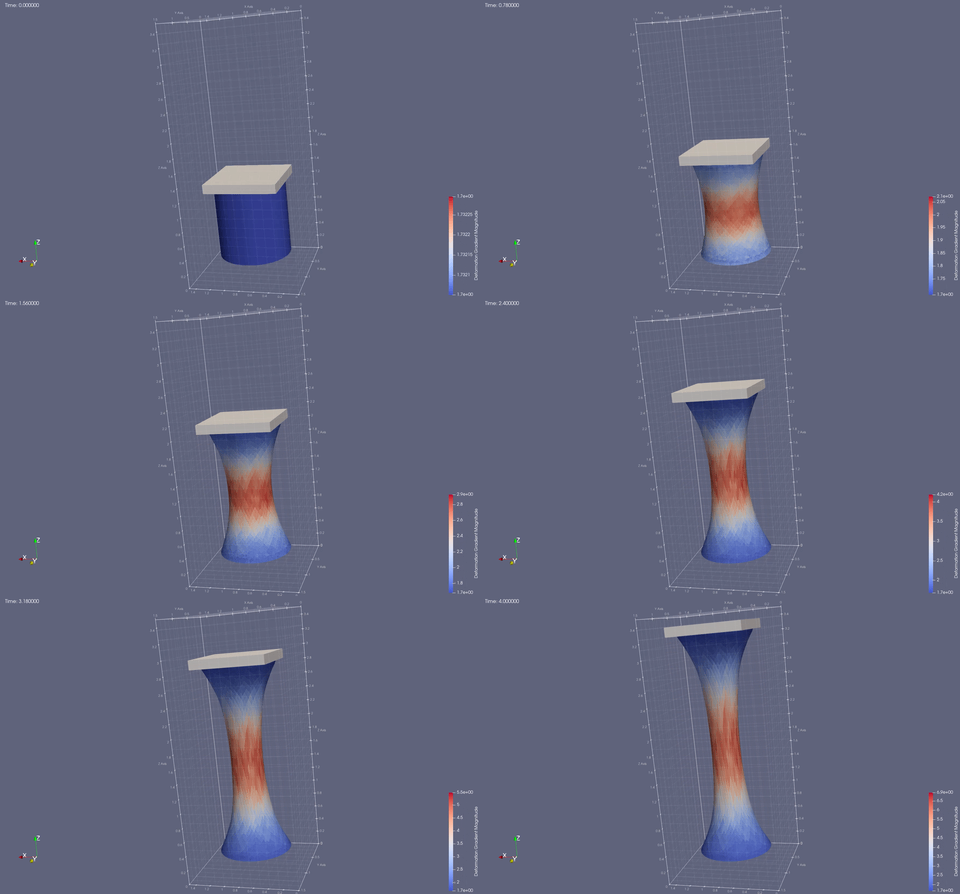
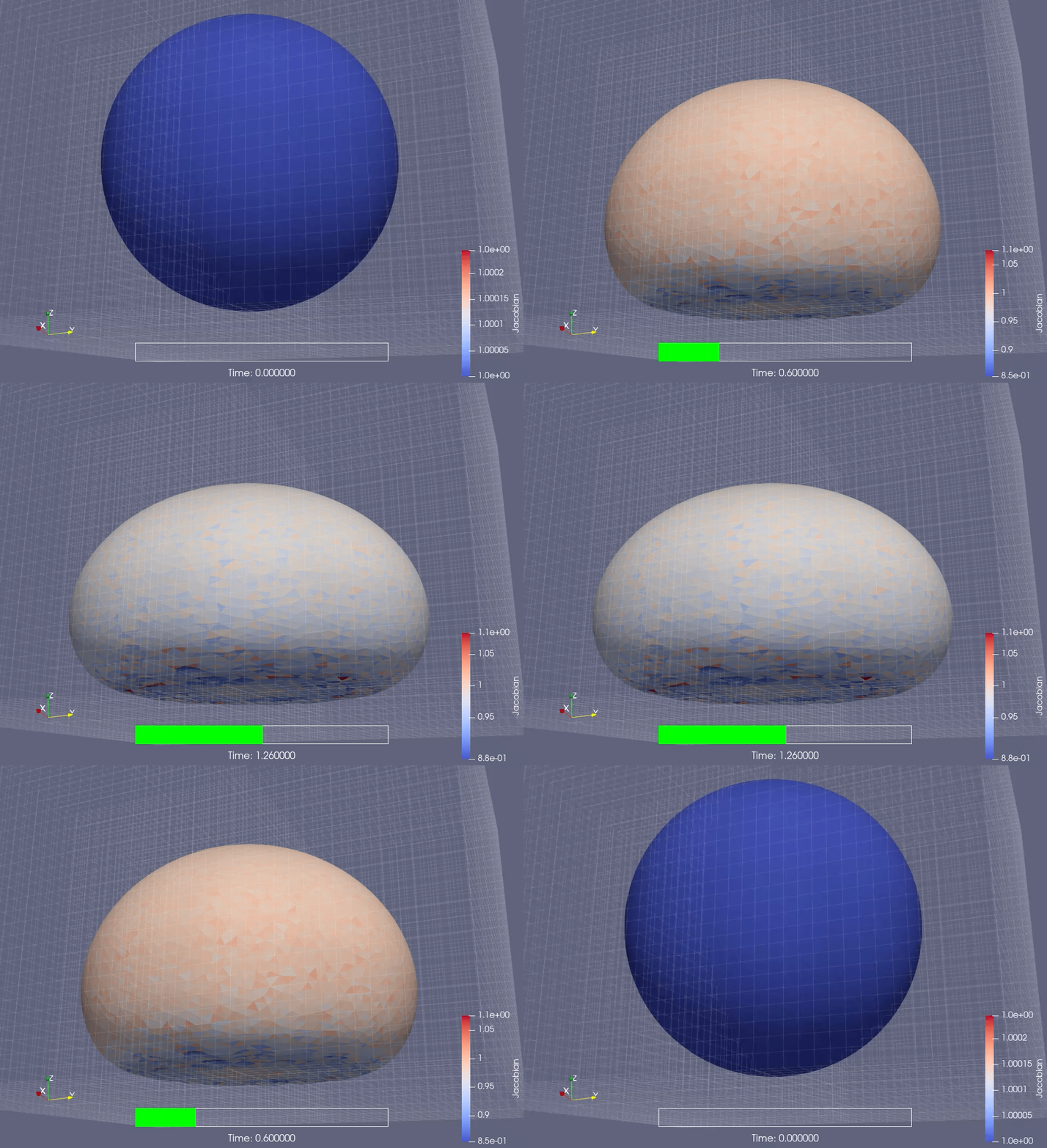
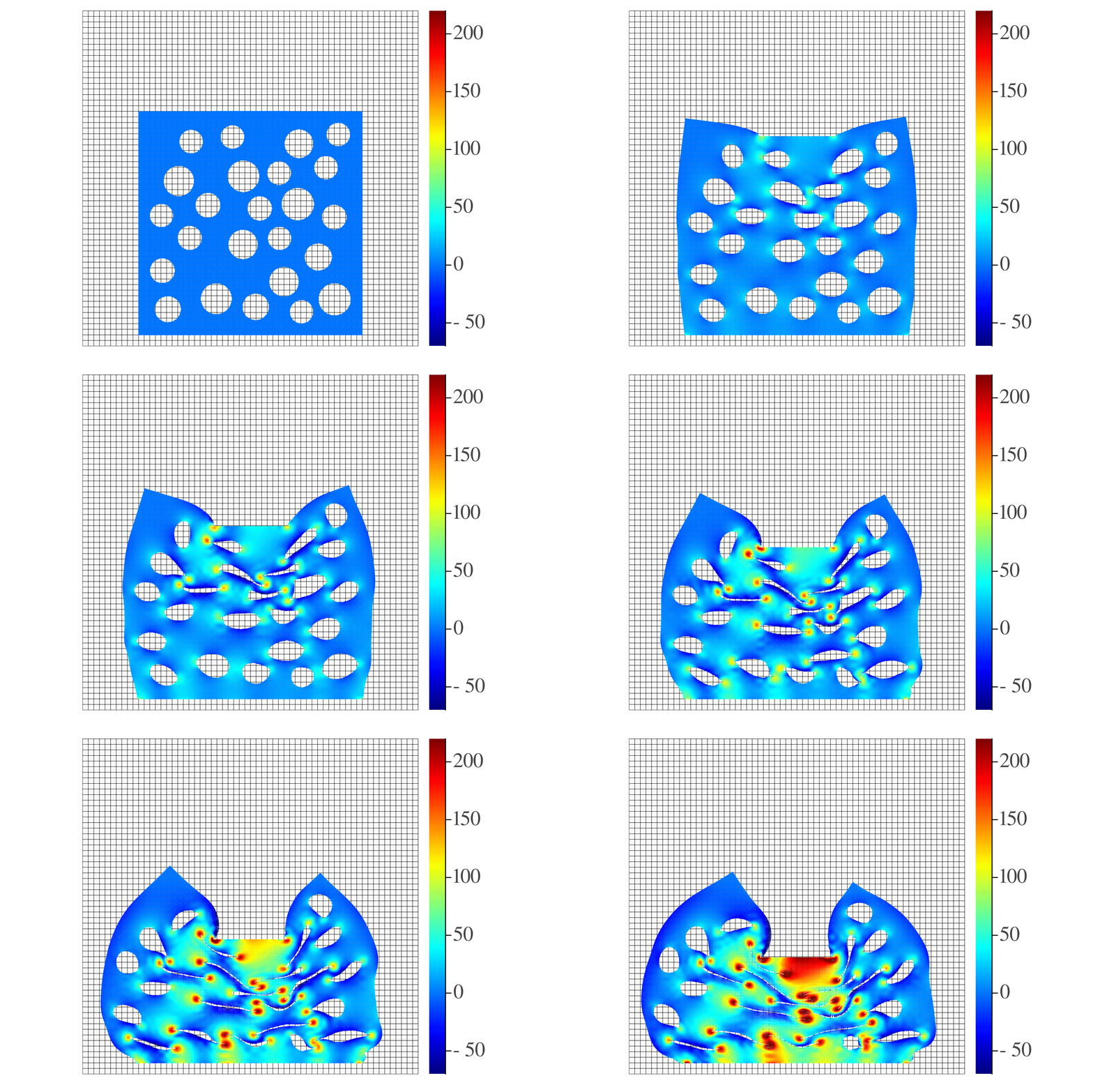
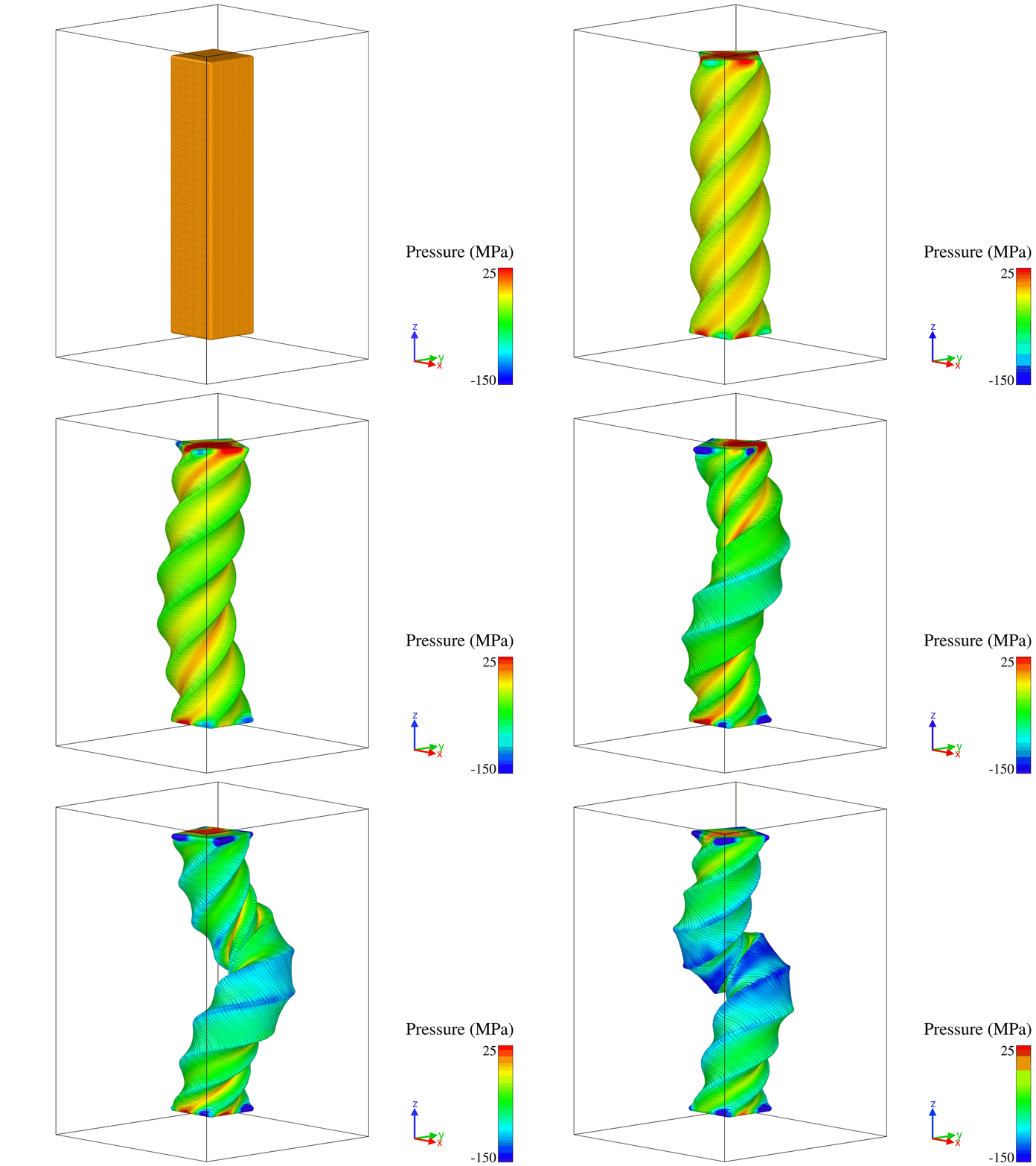
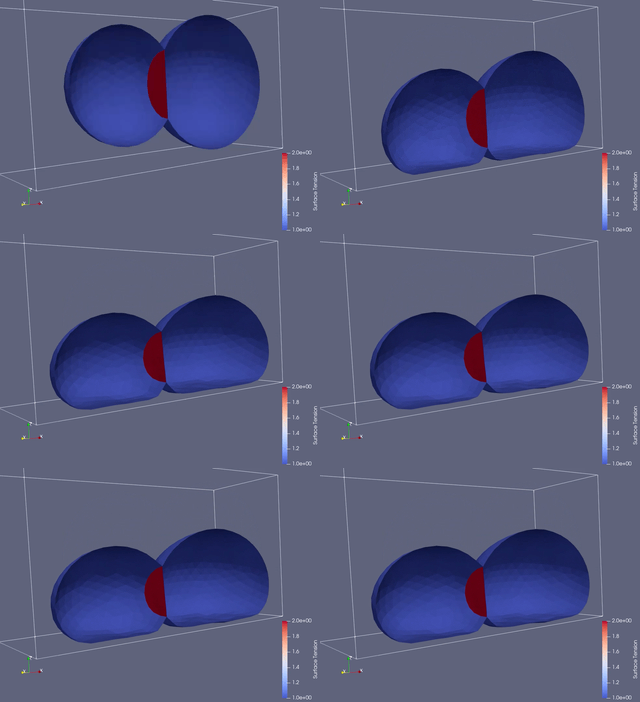
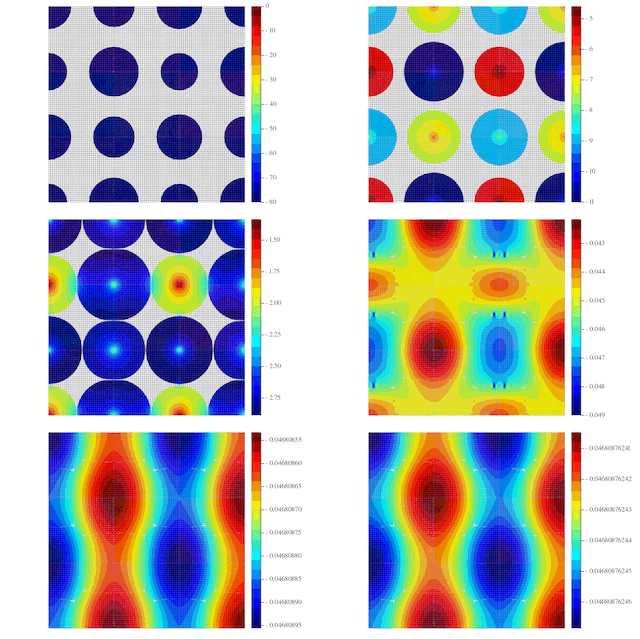
Our group integrates theoretical modeling, physics-based simulation, and table-top experiments to understand the behavior of soft polymeric and biomimetic multifunctional materials.
Active Funded Projects
-
NSF CAREERMultiscale Mechanics of Highly Deformable Strain-Gradient Electric Generators

-
NSF MRSECDesigning 3D-Printable Materials that Mimic Soft Interfacial GradientsCenter for Dynamics and Control of Materials, UT Austin

-
NSF DMREFComputational Design of Synthetic Tissue-Like Multifunctional Materials
-
NSFMechanics of Ultra-Soft Inclusions in Fibrous Materials
-
DOE EFRCMechanics of Isoporous MembranesCenter for Materials for Water and Energy Systems (M-WET)
-
TxDOTMicromechanical modeling of transport and mechanics in nanoparticle-enhanced concreteEvaluate Nanomaterials in Concrete for Improved Durability
Simulation Highlights
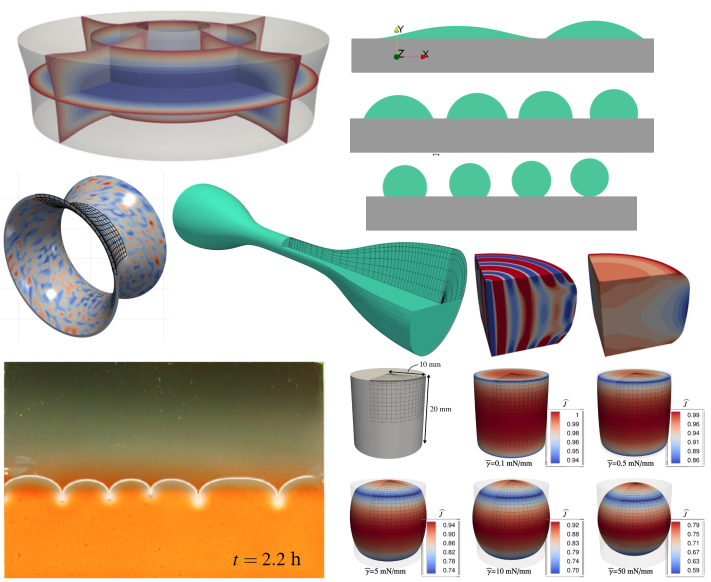
A glimpse of what we simulate.